


Airborne allergy – Lab Test – Sample Collection at Home
Buy more, save more
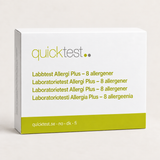
Upgrade to Allergy Test Plus (8 allergens) – Lab Test – Sample Collection at Home
+2 more markers for a more complete picture
Only +€27 €136,95 total
Test at a glance
Collect your sample at home and send it to the laboratory for analysis.
- Test type
- Lab tests at home
- Sample
- Capillary blood sample
- Results within
- Approx. 4 days from sample collection
- Reliability
- Laboratory analysis
- Results
- Digital report with explanations
- Analysed by an accredited laboratory (ISO 15189)
- A kit with everything you need is sent to your home


How it works
Check for IgE antibodies to the six most common airborne allergen sources using a capillary blood sample you collect at home.
The test at a glance
- Collect your sample entirely at home
- Liquid capillary blood from a fingertip
- Quantitative laboratory values
- Medical laboratory accredited to ISO 15189
- Quality assurance in accordance with Rili-BÄK
- Digital results in your personal health portal
What is analysed?
Birch t3
Birch pollen is the most common cause of pollen allergy in Sweden and is present in spring.
Timothy grass g6
Timothy is a grass used as a marker for grass pollen, which is present in early summer and summer.
Cat e1
Cat allergens spread easily through the air and remain for a long time in textiles and environments where cats have been.
Dog e5
Dog allergens are found in dander, saliva and urine and spread in a similar way to cat allergens.
Dermatophagoides pteronyssinus d1
The most common house dust mite. It is mainly found in bedding, mattresses and textiles.
Dermatophagoides farinae d2
A closely related house dust mite analysed separately from D. pteronyssinus.
What does sensitisation mean?
Detectable specific IgE indicates sensitisation, but does not automatically mean that exposure causes clinical allergy symptoms. The result must always be considered alongside symptoms and actual exposure.
Common allergy symptoms and when the test may be relevant
The test may be relevant for recurring respiratory symptoms when you are unsure whether pollen, pets or dust mites are responsible.
- sneezing, a runny or blocked nose
- itchy or watery eyes
- cough or other respiratory symptoms
- itching in the roof of the mouth or throat
- worsening asthma
Seek emergency medical care for difficulty breathing, swelling in the mouth or throat, dizziness or a suspected severe allergic reaction.
Who is the test for?
- People with respiratory symptoms who are unsure of the trigger.
- People who want to investigate pollen, pets and dust mites in one sample.
- People with symptoms both indoors and outdoors.
How the test works
- Order the test and receive the sampling kit at home.
- Read the instructions and complete any required preparation.
- Prick your fingertip and collect liquid capillary blood in the supplied sample tube.
- Label, package and send the sample to the laboratory.
- The laboratory analyses the included markers.
- View your digital laboratory report in your personal health portal.
Before collecting your sample
No special product-specific preparation is required according to the current product information. Always follow the instructions in the sampling kit.
Laboratory and quality
The sample is analysed at a medical laboratory accredited to ISO 15189. The laboratory's quality assurance also follows the Rili-BÄK guidelines for laboratory medical examinations.
- Sample material: liquid capillary blood
- Sampling location: at home
- Result: digital laboratory report
- Turnaround time: transport time and the scope of analysis affect the total time
Results and reference ranges
The report shows the analysed markers together with the laboratory's units and current reference ranges. Results should be interpreted in relation to age, sex, symptoms, medicines, lifestyle and medical history.
Important information about the result
A health test can identify abnormal laboratory values but does not provide a medical diagnosis or rule out disease. Contact a healthcare professional for clearly abnormal results, persistent symptoms or concerns.
Results and interpretation
The report provides the laboratory's findings for the included allergens. A positive result needs to be interpreted alongside symptoms and exposure and should not be used on its own to exclude foods or start treatment.
Frequently asked questions
Which allergens are included?
The analysis includes Birch t3, Timothy grass g6, Cat e1, Dog e5, Dermatophagoides pteronyssinus d1, Dermatophagoides farinae d2.
What is specific IgE?
These are IgE antibodies directed against a particular allergen.
Does a positive result mean I have an allergy?
Not automatically. The result indicates sensitisation and needs to be consistent with symptoms and exposure.
Can the test diagnose food intolerance?
No. IgE-mediated allergy and food intolerance are different conditions.
What should I do if the result is positive?
Discuss the result with a healthcare professional, particularly before making major dietary changes or if you have had severe reactions.
What is analysed
- Birch t3
- Timothy grass g6
- Cat e1
- Dog e5
- Dermatophagoides pteronyssinus d1
- Dermatophagoides farinae d2
Frequently asked questions
What does the airborne allergy test measure?
The test covers specific IgE to birch t3, timothy grass g6, cat e1, dog e5, Dermatophagoides pteronyssinus d1 and Dermatophagoides farinae d2.
- Birch t3
- Timothy grass g6
- Cat e1
- Dog e5
- Dermatophagoides pteronyssinus d1
- Dermatophagoides farinae d2
How is the sample taken?
You prick your finger and collect a capillary blood sample in the sample tube provided. Follow the sampling instructions carefully.
Do I need to prepare?
No product-specific preparation is specified. Always follow the instructions in the sampling kit.
How is the sample sent?
Label and pack the sample, then send it to the laboratory as instructed.
When will I get my results?
When the laboratory analysis is complete, you receive your results digitally. Transport time and the scope of the analysis affect the total turnaround time.
Can the test provide a diagnosis?
No. The test provides laboratory values that need to be assessed together with symptoms, medical history and other circumstances.


Home testing made simple
Quicktest brings together self-tests and home sampling tests in one place. Clear instructions, discreet delivery and easy-to-understand results help you take the next step with confidence.


