Wheat and glutenf4

Wheat allergy

Wheat allergy is an IgE allergy to proteins in wheat and not the same as coeliac disease. A positive test for wheat can also be due to grass pollen allergy.

Allergen
Wheat Triticum aestivum
Allergen code
f4
Key allergens
Omega-5 gliadin, gliadin
Included in
2 tests
Contents
  1. What is wheat allergy?
  2. Three different conditions
  3. Symptoms
  4. Cross-reactivity with grass pollen
  5. How to get tested
  6. Frequently asked questions

What is wheat allergy?

In wheat allergy, the immune system reacts with IgE antibodies to proteins in wheat. The allergy is most common in young children, who often outgrow it. In adults, wheat allergy can cause severe reactions, sometimes only in combination with physical exertion.

Wheat allergy can also develop from breathing in flour. Baker's asthma is one of the most common occupational allergies.

Three different conditions

  • Wheat allergy is an IgE allergy that can cause rapid reactions. It shows up in an IgE test.
  • Coeliac disease is an autoimmune disease in which gluten damages the small intestine. It does not show up in an IgE test but is investigated with other blood tests and tissue samples.
  • Gluten sensitivity without coeliac disease or allergy causes stomach problems but cannot be detected with a blood test.

Symptoms

  • Hives, itching and eczema
  • Vomiting, stomach ache and diarrhoea
  • A runny nose and asthma
  • A severe allergic reaction (anaphylaxis), sometimes triggered by exertion after the meal

Cross-reactivity with grass pollen

Wheat belongs to the grass family. People who are allergic to grass pollen can therefore get a positive IgE test for wheat without wheat in food causing symptoms. The components gliadin and omega-5-gliadin are found in wheat but not in grass pollen, and therefore help to distinguish a true wheat allergy from cross-reactivity.

How to get tested

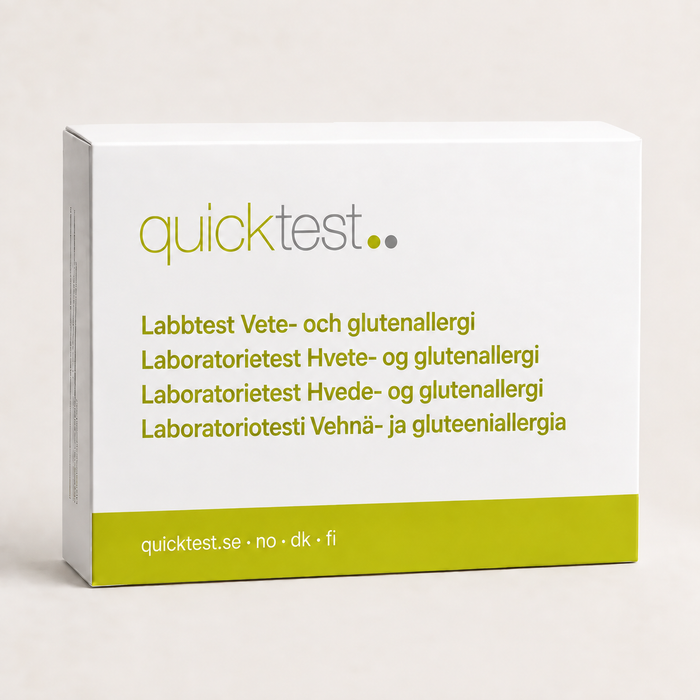
Wheat (allergen code f4) is included in our Wheat and gluten allergy test, which also measures gliadin, and in our Wheat and gluten allergy Plus test, which additionally measures omega-5-gliadin. The tests show IgE to wheat and cannot detect coeliac disease.

Frequently asked questions

Can I eat gluten-free products if I am allergic to wheat?

Gluten-free products contain no gluten but may contain other wheat proteins, for example in gluten-free wheat starch. People with wheat allergy need to avoid wheat in all its forms, not just gluten.

How do I get tested for coeliac disease?

Coeliac disease is investigated with a blood test for transglutaminase antibodies and is often confirmed with a tissue sample from the small intestine. You should not stop eating gluten before the investigation. Talk to your doctor.

This text is general information and does not replace an assessment by a healthcare professional. In an emergency, call 112. If you have questions about your health, contact your doctor.

Tests for wheat allergy

You take the sample yourself at home. The tests measure IgE antibodies in a capillary blood sample.

Wheat and gluten

Wheat allergy is an IgE allergy and not the same as coeliac disease. Gliadin and omega-5-gliadin help to distinguish a true wheat allergy from cross-reactivity with grass pollen.

All allergens A–Z

Find the right test in 1 minute

We offer three types of tests - choose the one that suits you best.

Self-test: quick response at home directly.
Lab test - sampling at home: Take the sample yourself and send it to a lab for analysis.
Lab test - sampling clinic: sampling at a clinic or sampling site.

You will receive clear information about what the test shows, how it is used and what the next steps may be.