Weed pollenw1

Ragweed allergy

Ragweed is an invasive weed with highly allergenic pollen. The plant is spreading in Europe, and its pollen can be carried long distances by the wind in late summer.

Allergen
Ragweed Ambrosia artemisiifolia
Allergen code
w1
Season
August–September
Key allergens
Amb a 1
Included in
1 test
Contents
  1. What is ragweed allergy?
  2. Symptoms
  3. When does ragweed flower?
  4. Cross-reactivity
  5. How to get tested
  6. Frequently asked questions

What is ragweed allergy?

Ragweed, or common ragweed, originally comes from North America and has spread in Europe, particularly in Hungary, northern Italy, France and the Balkans. A single plant can produce large amounts of pollen, and even low levels are enough to cause symptoms. The most important allergen is called Amb a 1.

Symptoms

  • Sneezing and a runny or blocked nose
  • Itchy and watery eyes
  • Coughing and asthma symptoms

When does ragweed flower?

Ragweed flowers from August into September. In northern Europe the plants are still uncommon, but pollen can be carried there by the wind from further south. If you live in or travel to central and eastern Europe in late summer, you can be exposed to high levels.

Cross-reactivity

Ragweed and mugwort belong to the same plant family and partly flower at the same time. It can be hard to know which of them is causing the symptoms, and many people react to both. Some people with ragweed allergy also react to melon and banana.

How to get tested

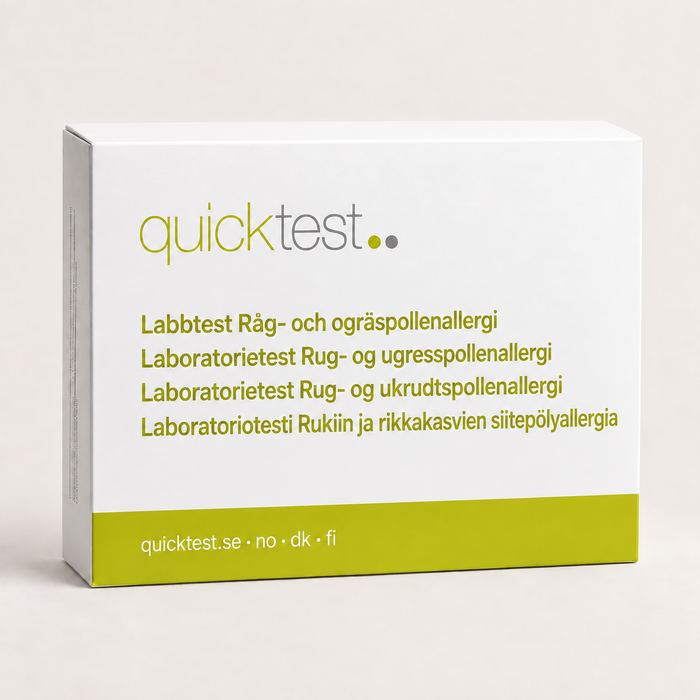
Ragweed (allergen code w1) is included in our Rye and weed pollen allergy test, together with rye pollen and wall pellitory. The test shows whether you have IgE antibodies to ragweed pollen.

Frequently asked questions

Does ragweed grow in northern Europe?

Yes, but so far only on a small scale – in Sweden, for example. The plants usually turn up where birdseed has been spilled, such as under bird feeders.

Why is ragweed called a growing problem?

The plant is spreading in Europe, and a warmer climate gives it a longer season. More people are therefore expected to be exposed to ragweed pollen in the future.

Often cross-reacts with

This text is general information and does not replace an assessment by a healthcare professional. In an emergency, call 112. If you have questions about your health, contact your doctor.

Tests for ragweed allergy

You take the sample yourself at home. The tests measure IgE antibodies in a capillary blood sample.

Weed pollen

Mugwort flowers in July–August. Ragweed and wall pellitory are more common further south in Europe, but ragweed pollen can be carried long distances by the wind in late summer.

All allergens A–Z

Find the right test in 1 minute

We offer three types of tests - choose the one that suits you best.

Self-test: quick response at home directly.
Lab test - sampling at home: Take the sample yourself and send it to a lab for analysis.
Lab test - sampling clinic: sampling at a clinic or sampling site.

You will receive clear information about what the test shows, how it is used and what the next steps may be.