Weed pollenw19

Wall pellitory allergy

Wall pellitory is a weed in the nettle family and one of the most common causes of pollen allergy around the Mediterranean. The season is long and can last for most of the year.

Allergen
Wall pellitory Parietaria officinalis
Allergen code
w19
Season
March–October (southern Europe)
Key allergens
Par o 1
Included in
1 test
Contents
  1. What is wall pellitory allergy?
  2. Symptoms
  3. When does wall pellitory flower?
  4. Cross-reactivity
  5. How to get tested
  6. Frequently asked questions

What is wall pellitory allergy?

Wall pellitory grows on walls, in rock piles and in cracks in towns and cities around the Mediterranean. The plant belongs to the nettle family but has no stinging hairs. It releases a lot of pollen over a long period, and in parts of Italy, Spain and Greece it is one of the most common causes of pollen allergy. The most important allergen is called Par o 1.

Symptoms

  • Sneezing and a runny or blocked nose
  • Itchy and watery eyes
  • Coughing and asthma symptoms

When does wall pellitory flower?

In the Mediterranean region, wall pellitory flowers from March to October, with peaks in spring and late summer. Further north it is less common, so there the allergy mainly becomes relevant if you travel a lot or spend part of the year in southern Europe.

Cross-reactivity

The allergens in different wall pellitory species are similar, so IgE to one species usually means reacting to several. Wall pellitory rarely cross-reacts with other pollen, however.

How to get tested

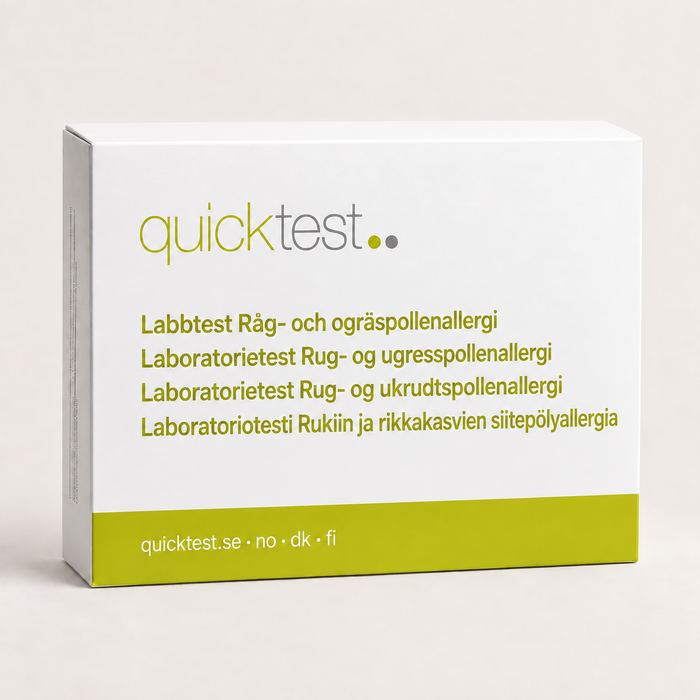
Wall pellitory (allergen code w19) is included in our Rye and weed pollen allergy test, together with rye pollen and ragweed. The test shows whether you have IgE antibodies to wall pellitory pollen.

Frequently asked questions

Is wall pellitory the same as nettles?

Wall pellitory belongs to the nettle family but is a different plant. Being allergic to wall pellitory does not mean that you react to stinging nettles.

Why do I get pollen symptoms in Italy in October?

In the Mediterranean region, wall pellitory can flower well into the autumn. It is one of the few pollen sources that can explain symptoms so late in the year.

This text is general information and does not replace an assessment by a healthcare professional. In an emergency, call 112. If you have questions about your health, contact your doctor.

Tests for wall pellitory allergy

You take the sample yourself at home. The tests measure IgE antibodies in a capillary blood sample.

Weed pollen

Mugwort flowers in July–August. Ragweed and wall pellitory are more common further south in Europe, but ragweed pollen can be carried long distances by the wind in late summer.

All allergens A–Z

Find the right test in 1 minute

We offer three types of tests - choose the one that suits you best.

Self-test: quick response at home directly.
Lab test - sampling at home: Take the sample yourself and send it to a lab for analysis.
Lab test - sampling clinic: sampling at a clinic or sampling site.

You will receive clear information about what the test shows, how it is used and what the next steps may be.