Weed pollenw6

Mugwort allergy

Mugwort is a common weed along roadsides and on wasteland that flowers in late summer. The allergy can be linked to cross-reactions with celery, carrot and spices.

Allergen
Mugwort Artemisia vulgaris
Allergen code
w6
Season
July–September
Key allergens
Art v 1, Art v 3
Included in
1 test
Contents
  1. What is mugwort allergy?
  2. Symptoms
  3. When does mugwort flower?
  4. Cross-reactivity
  5. How to get tested
  6. Frequently asked questions

What is mugwort allergy?

Mugwort is a perennial herb that grows along roads and railways and on building sites, often in towns and cities. It releases pollen into the wind in late summer, when most other pollen seasons are over. The most important allergen is called Art v 1.

Symptoms

  • Sneezing and a runny or blocked nose
  • Itchy and watery eyes
  • Coughing and asthma symptoms

Pollen symptoms in August, after the grasses have finished flowering, can be a sign of mugwort allergy.

When does mugwort flower?

Mugwort flowers from late July to September, with the highest levels in August.

Cross-reactivity

Mugwort allergy is linked to several food allergies. The best-known link is between mugwort, celery and spices such as aniseed, fennel, coriander and caraway – sometimes called the celery–mugwort–spice syndrome. Carrot, mustard and bell pepper can also cause reactions. Mugwort is also related to ragweed.

How to get tested

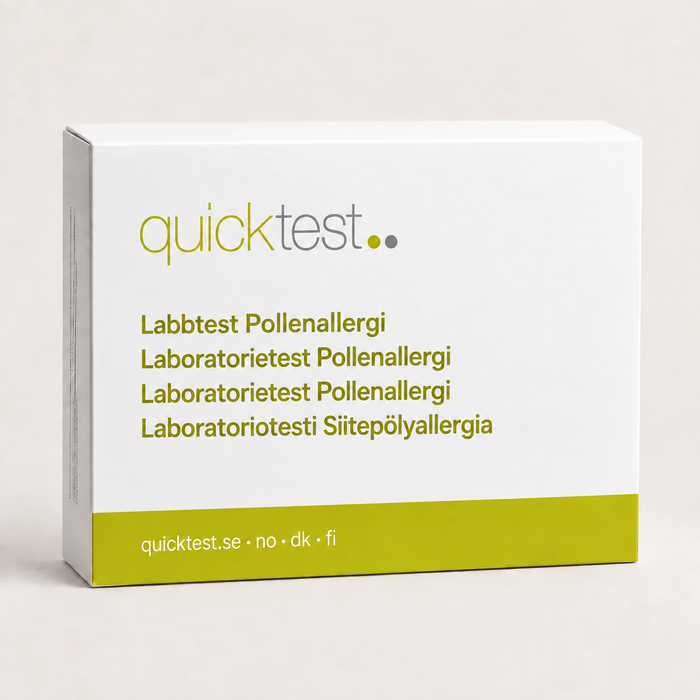
Mugwort (allergen code w6) is included in our Pollen allergy test, together with birch, alder, hazel and timothy grass. The test shows whether you have IgE antibodies to mugwort pollen and can be taken at any time of year.

Frequently asked questions

Why do I react to spices?

Several spice plants, such as coriander, aniseed and caraway, contain proteins that resemble the allergens in mugwort. The immune system can therefore react to the spices, especially when they are raw or only lightly heated.

Is mugwort the same as wormwood?

No, but they are closely related. Both mugwort and wormwood belong to the genus Artemisia and have similar pollen.

This text is general information and does not replace an assessment by a healthcare professional. In an emergency, call 112. If you have questions about your health, contact your doctor.

Tests for mugwort allergy

You take the sample yourself at home. The tests measure IgE antibodies in a capillary blood sample.

Weed pollen

Mugwort flowers in July–August. Ragweed and wall pellitory are more common further south in Europe, but ragweed pollen can be carried long distances by the wind in late summer.

All allergens A–Z

Find the right test in 1 minute

We offer three types of tests - choose the one that suits you best.

Self-test: quick response at home directly.
Lab test - sampling at home: Take the sample yourself and send it to a lab for analysis.
Lab test - sampling clinic: sampling at a clinic or sampling site.

You will receive clear information about what the test shows, how it is used and what the next steps may be.