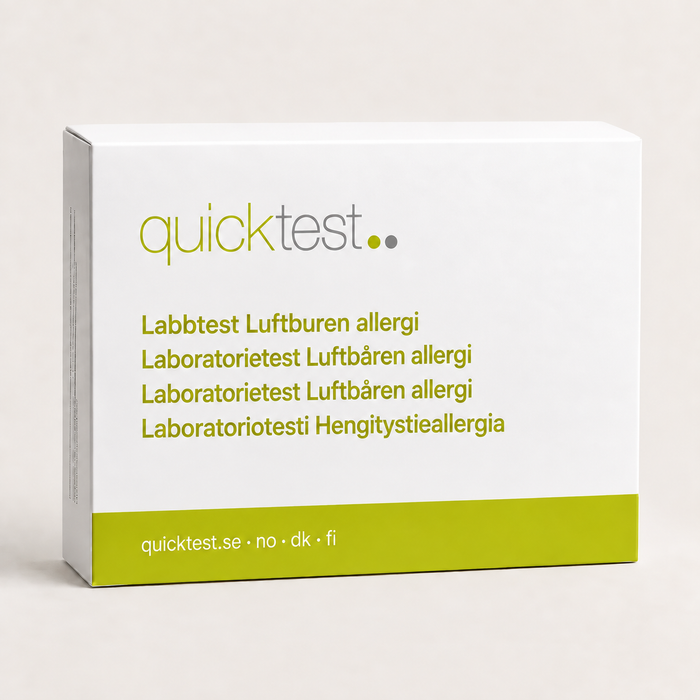
At-home lab testHouse dust mite allergy – Lab Test – Sample Collection at Home
Measures: Dermatophagoides pteronyssinus, Dermatophagoides farinae
€63,95

Example: fatigue, stomach pain, urinary symptoms, joint pain

Our AI suggestions are designed to guide you to relevant tests.
House dust mites and cockroachesd2
D. farinae is one of the two common species of house dust mite. It tolerates drier air than D. pteronyssinus and is most common in North America, but is also found in Europe.
Often cross-reacts with
This text is general information and does not replace an assessment by a healthcare professional. In an emergency, call 112. If you have questions about your health, contact your doctor.
You take the sample yourself at home. The tests measure IgE antibodies in a capillary blood sample.
Measures: Dermatophagoides pteronyssinus, Dermatophagoides farinae
€63,95
Measures: Cockroach, Dermatophagoides pteronyssinus, Dermatophagoides farinae
€63,95
Measures: Birch, Timothy grass, Cat, Dog, Dermatophagoides pteronyssinus …
€109,95
House dust mites live in beds and textiles and cause symptoms all year round, often worst at night and in the morning. Cockroaches are uncommon in cooler countries but common in warmer ones.
All allergens A–ZWe offer three types of tests - choose the one that suits you best.
Self-test: quick response at home directly.
Lab test - sampling at home: Take the sample yourself and send it to a lab for analysis.
Lab test - sampling clinic: sampling at a clinic or sampling site.
You will receive clear information about what the test shows, how it is used and what the next steps may be.