House dust mites and cockroachesd1

House dust mite allergy

House dust mites live in beds, sofas and textiles and are a common cause of allergy symptoms all year round. D. pteronyssinus is the most common species in Europe.

Allergen
House dust mite (D. pteronyssinus) Dermatophagoides pteronyssinus
Allergen code
d1
Season
All year round
Key allergens
Der p 1, Der p 2
Included in
4 tests
Contents
  1. What is house dust mite allergy?
  2. Symptoms
  3. Two species
  4. Cross-reactivity
  5. How to get tested
  6. Frequently asked questions

What is house dust mite allergy?

House dust mites are microscopic arachnids that feed on skin flakes in beds, pillows, mattresses, upholstered furniture and carpets. The allergens are mainly found in the mites' droppings, which mix with the dust. The most important allergens are called Der p 1 and Der p 2.

Mites thrive in warm, humid conditions. In countries where indoor air is dry in winter, such as Sweden, levels are often lower than elsewhere, but mite allergy still occurs, especially in damp homes.

Symptoms

  • A blocked or runny nose all year round
  • Sneezing, often in the morning
  • Itchy eyes
  • Coughing, wheezing and asthma, often at night
  • Worsening eczema in people with atopic eczema

Symptoms are often worst in bed, when making the bed and when cleaning, as the dust is stirred up.

Two species

There are two common species of house dust mite, D. pteronyssinus and D. farinae. Their allergens are very similar, and most people with house dust mite allergy react to both. D. pteronyssinus dominates in Europe.

Cross-reactivity

Mites contain the protein tropomyosin, which resembles tropomyosin in cockroaches and in shellfish such as shrimp. People with IgE to mite tropomyosin can therefore also react to shellfish, but this applies to only a small proportion of everyone with house dust mite allergy.

How to get tested

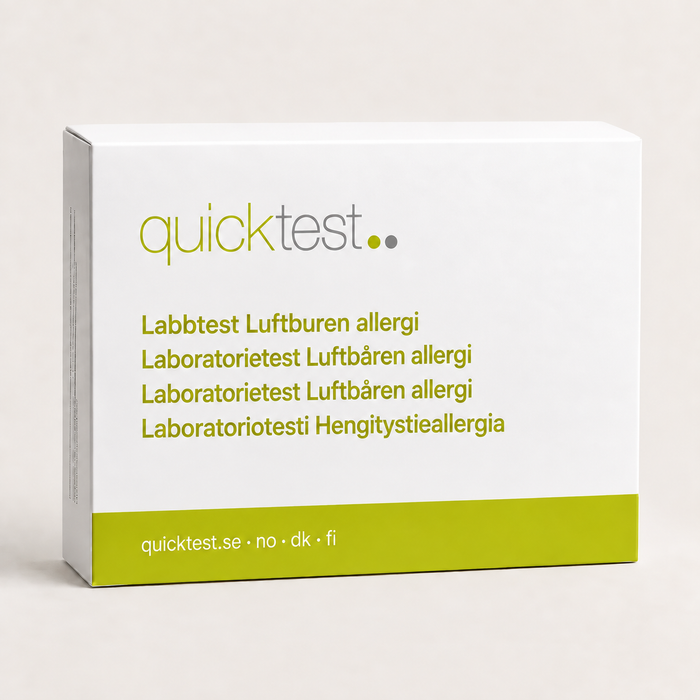
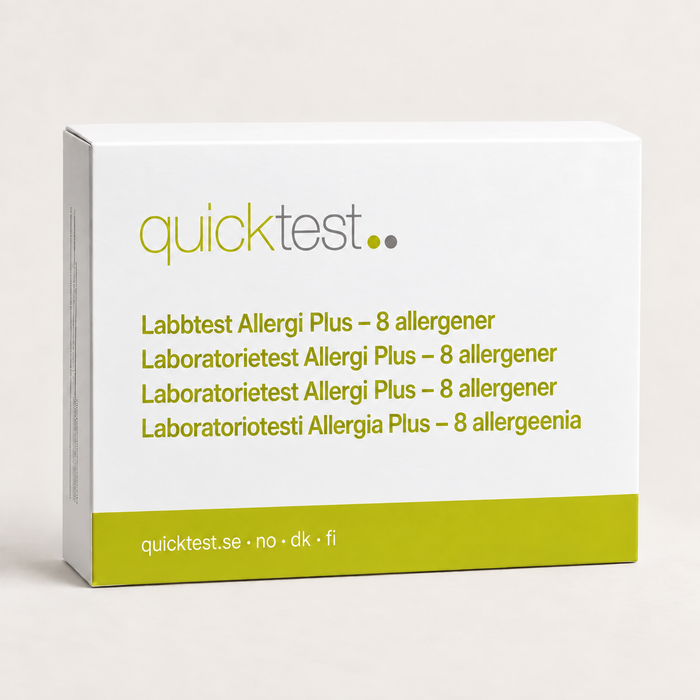
D. pteronyssinus (allergen code d1) is included in our House dust mite allergy test, which measures both mite species. It is also included in our Indoor allergens and Airborne allergy tests and in Allergy Test Plus.

Frequently asked questions

Does it help to wash bedding at a high temperature?

Yes. Washing at 60 °C or above kills the mites and removes much of the allergen. Mite-proof covers for the mattress and pillow can also reduce symptoms.

Why is my nose blocked all year round?

Year-round symptoms that are worse in the morning can be caused by mites, but also by furry animals or other causes. A blood test can show whether you have IgE to mites.

This text is general information and does not replace an assessment by a healthcare professional. In an emergency, call 112. If you have questions about your health, contact your doctor.

Tests for house dust mite allergy

You take the sample yourself at home. The tests measure IgE antibodies in a capillary blood sample.

House dust mites and cockroaches

House dust mites live in beds and textiles and cause symptoms all year round, often worst at night and in the morning. Cockroaches are uncommon in cooler countries but common in warmer ones.

All allergens A–Z

Find the right test in 1 minute

We offer three types of tests - choose the one that suits you best.

Self-test: quick response at home directly.
Lab test - sampling at home: Take the sample yourself and send it to a lab for analysis.
Lab test - sampling clinic: sampling at a clinic or sampling site.

You will receive clear information about what the test shows, how it is used and what the next steps may be.