Nuts, seeds and legumesf13

Peanut allergy

Peanut allergy is one of the food allergies that most often cause severe reactions. The peanut is a legume, not a nut, but many people with peanut allergy also react to nuts.

Allergen
Peanut Arachis hypogaea
Allergen code
f13
Key allergens
Ara h 2, Ara h 8
Included in
2 tests
Contents
  1. What is peanut allergy?
  2. Symptoms
  3. Where peanut is found
  4. Cross-reactivity
  5. How to get tested
  6. Frequently asked questions

What is peanut allergy?

The peanut is a legume, related to peas, beans and soy. In peanut allergy, the immune system reacts to the proteins in peanuts, and even very small amounts can trigger a reaction. The allergy often starts in childhood and is usually lifelong, although some children outgrow it.

There are different types of IgE to peanut. IgE to the storage proteins, such as Ara h 2, is linked to a higher risk of severe reactions. IgE to Ara h 8, which resembles Bet v 1 in birch pollen, usually only causes an itchy mouth in people with birch allergy.

Symptoms

  • Itching and swelling in the mouth, lips and throat
  • Hives and redness
  • Vomiting and stomach ache
  • Coughing, hoarseness and breathing difficulties
  • A severe allergic reaction (anaphylaxis)

Call 112 in case of breathing difficulties, swelling in the throat or if the person seems very unwell.

Where peanut is found

Peanuts are found in peanut butter, nut mixes, sweets, biscuits, ice cream, satay sauce, Asian and African dishes and some vegetarian products. Peanut is one of the allergens that must always be declared on the ingredients list. Cold-pressed peanut oil can contain protein.

Cross-reactivity

Many people with peanut allergy also react to tree nuts such as hazelnut, cashew and walnut – usually not because the proteins are similar, but because the allergies often occur together. Cross-reactions with other legumes such as soy and peas often show up in blood tests but less often cause symptoms. Lupin is an exception and more often causes reactions.

How to get tested

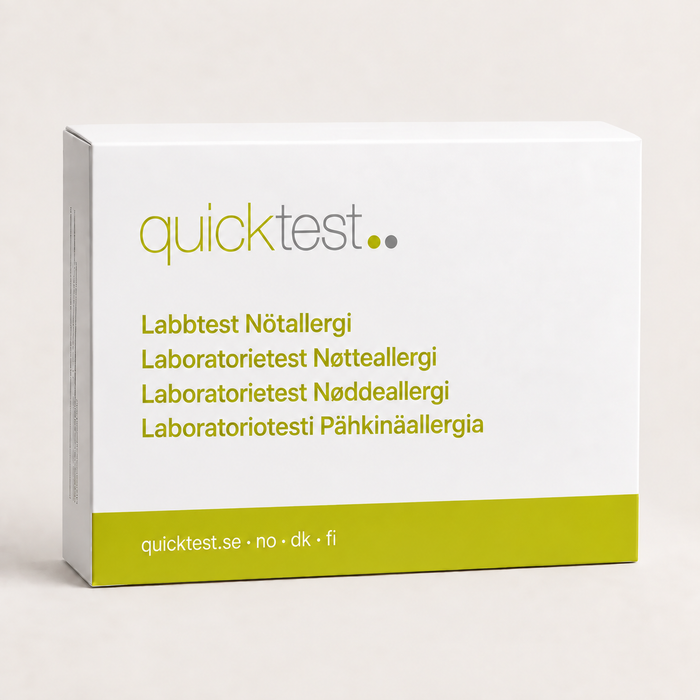
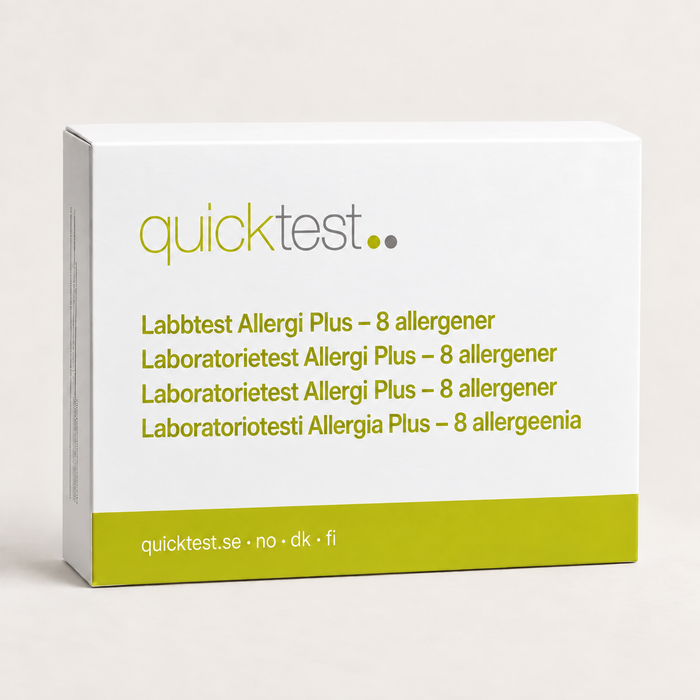
Peanut (allergen code f13) is included in our Nut allergy test, which also measures hazelnut, and in Allergy Test Plus. The test shows whether you have IgE antibodies to peanut. If you have had a severe reaction to peanut, the allergy should be investigated by a doctor, who can also have the individual proteins measured.

Frequently asked questions

Is a peanut a nut?

No, the peanut is a legume that grows underground. In food contexts, however, it is often grouped together with nuts.

Can I react if someone next to me eats peanuts?

The allergen does not spread significantly through the air. Reactions usually happen when peanut gets into your mouth, for example via hands, cutlery or a kiss.

Often cross-reacts with

This text is general information and does not replace an assessment by a healthcare professional. In an emergency, call 112. If you have questions about your health, contact your doctor.

Tests for peanut allergy

You take the sample yourself at home. The tests measure IgE antibodies in a capillary blood sample.

Nuts, seeds and legumes

Peanut, hazelnut, sesame, soy and mustard are among the 14 allergens that must always be declared on the ingredients list. In adults with birch allergy, reactions are often due to cross-reactivity.

All allergens A–Z

Find the right test in 1 minute

We offer three types of tests - choose the one that suits you best.

Self-test: quick response at home directly.
Lab test - sampling at home: Take the sample yourself and send it to a lab for analysis.
Lab test - sampling clinic: sampling at a clinic or sampling site.

You will receive clear information about what the test shows, how it is used and what the next steps may be.