Furry animalse1

Cat allergy

Cat allergy is one of the most common allergies to furry animals. The allergen spreads easily and is found even where no cat has ever lived, such as in schools and offices.

Allergen
Cat Felis domesticus
Allergen code
e1
Season
All year round
Key allergens
Fel d 1
Included in
3 tests
Contents
  1. What is cat allergy?
  2. Symptoms
  3. Are there allergy-free cats?
  4. Cross-reactivity
  5. How to get tested
  6. Frequently asked questions

What is cat allergy?

In cat allergy, the immune system reacts to proteins from cats. The most important allergen is called Fel d 1 and is mainly produced in the sebaceous glands of the skin and in saliva. When the cat grooms itself, the allergen ends up in its fur and then spreads with dander and dust.

Fel d 1 is small and sticky. It stays in the air for a long time, sticks to clothing and is carried into schools, workplaces and public transport. That is why you can get symptoms even without having a cat yourself.

Symptoms

  • Sneezing and a runny or blocked nose
  • Itchy, red and swollen eyes
  • Coughing, wheezing and asthma
  • Hives or itching where the cat has licked or scratched

Symptoms can appear within minutes in a home with a cat, but they can also develop gradually in people who spend a lot of time with cat owners.

Are there allergy-free cats?

No. All cats produce Fel d 1, even breeds marketed as hypoallergenic. The amount varies between individual cats, and uncastrated males often produce more than females. Some people with cat allergy have fewer symptoms with certain cats, but this cannot be reliably predicted.

Cross-reactivity

Albumin, a protein found in blood and dander, is similar in many animals. Some people with cat allergy therefore also react to dogs and other furry animals. In rare cases, cat albumin can also cause reactions to pork.

How to get tested

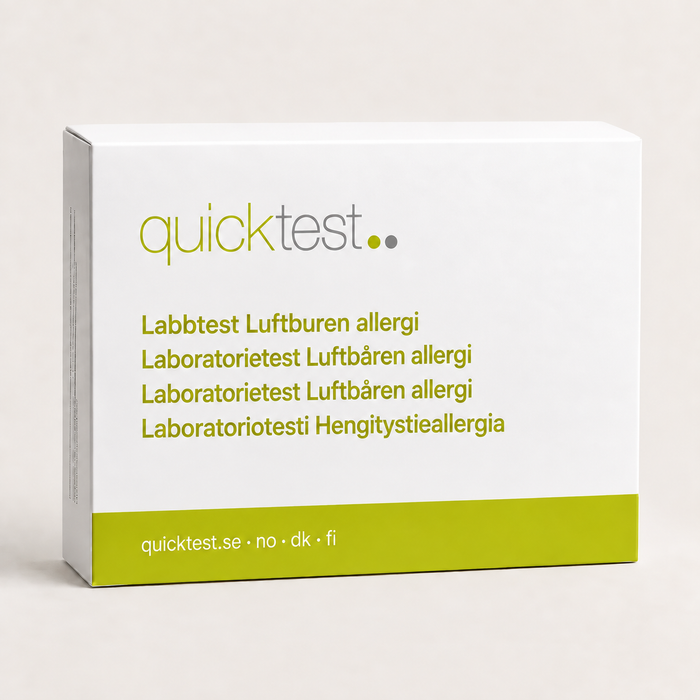
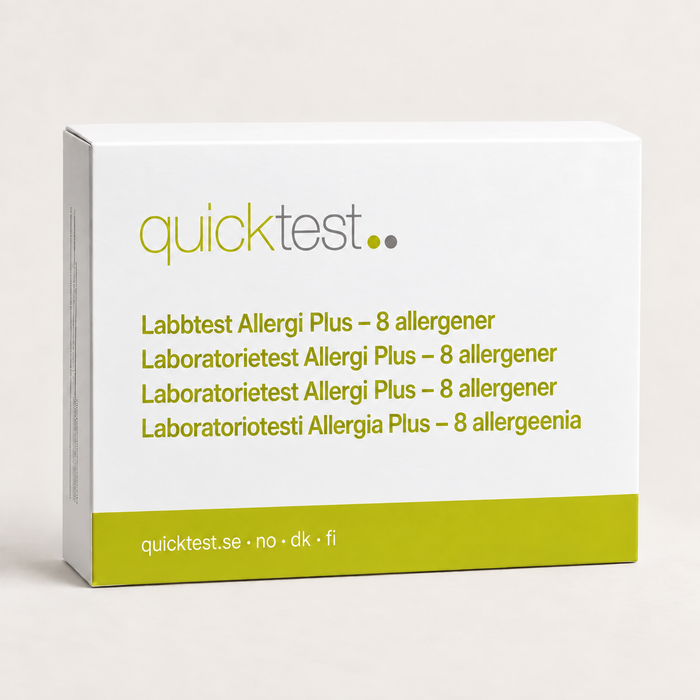
Cat (allergen code e1) is included in our Cat and dog allergy and Airborne allergy tests and in Allergy Test Plus. The test shows whether you have IgE antibodies to cat.

Frequently asked questions

Can you become allergic to cats as an adult?

Yes. Cat allergy can develop at any age, even in people who have previously had cats without any problems.

Does bathing the cat help?

The amount of allergen in the fur drops temporarily, but it is back within a couple of days. This is usually not enough to reduce symptoms noticeably.

Often cross-reacts with

This text is general information and does not replace an assessment by a healthcare professional. In an emergency, call 112. If you have questions about your health, contact your doctor.

Tests for cat allergy

You take the sample yourself at home. The tests measure IgE antibodies in a capillary blood sample.

Furry animals

The allergens from cats and dogs are found in dander and saliva. They are light and sticky and travel on clothing to schools, workplaces and public transport.

All allergens A–Z

Find the right test in 1 minute

We offer three types of tests - choose the one that suits you best.

Self-test: quick response at home directly.
Lab test - sampling at home: Take the sample yourself and send it to a lab for analysis.
Lab test - sampling clinic: sampling at a clinic or sampling site.

You will receive clear information about what the test shows, how it is used and what the next steps may be.